
Technical Knowledge
What is a PLC Splitter? Beginner's Primer
Published July 20, 2026
Two-minute introduction to Planar Lightwave Circuit splitters — what they do, why fiber networks need them, and the three numbers that define one.
The one-line definition
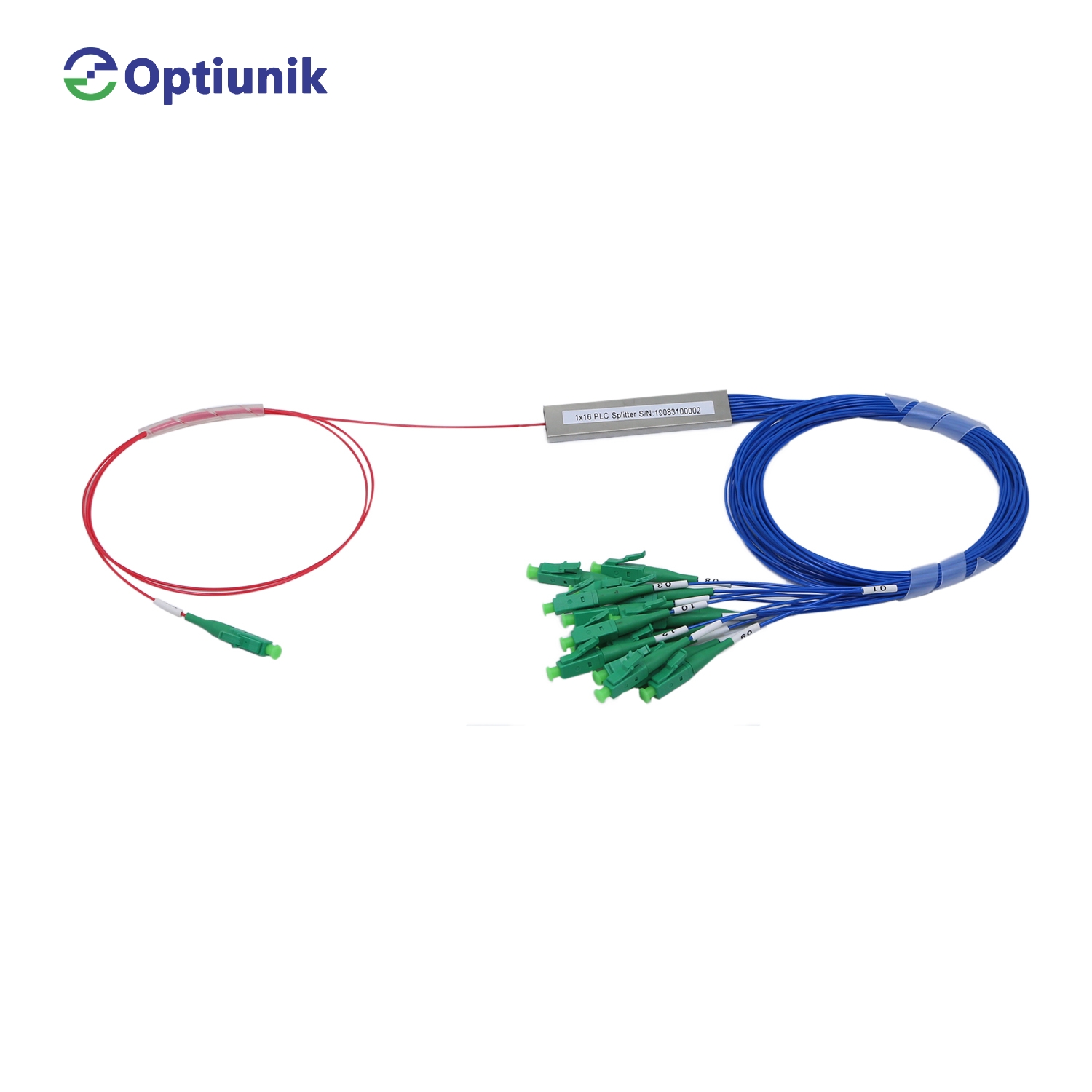
A PLC splitter is a passive optical device that takes one input fiber and divides its light into multiple output fibers — no electricity, no amplification. The same silicon photonic chip that makes a CMOS sensor also makes a perfectly uniform 1×N waveguide. Hence "Planar Lightwave Circuit".
Why fiber networks need them
Imagine an ISP serving 1 000 homes from one fiber port at the central office. Without splitters, that would require 1 000 individual fibers running back to the central office — economically impossible. With a 32-way PLC splitter at the curb, one feeder fiber serves 32 homes. Cascade two of them and you get 1 024 subscribers per feeder. That is Passive Optical Network (PON) economics in one paragraph.
The three numbers that define a PLC splitter
Number | What it means | Common values |
|---|---|---|
Split ratio | How many output fibers the input divides into | 1×2 / 1×8 / 1×32 / 1×64 |
Insertion loss | Optical loss per output port (dB) | ≈ 3.5 dB per doubling |
Operating band | Wavelength range over which IL is flat | 1260–1625 nm typical |
A 1×32 splitter therefore burns roughly 17 dB of optical power before a single meter of fiber is counted. That is the budget item planners worry about most when extending PON reach.
Where they live in the network
Central office cabinet: 1U rack-mount splitter with managed LC pigtails.
Curb / street cabinet: ABS-box splitter with SC/APC pigtails, sealed against weather.
Multi-dwelling unit (MDU): insert-type (LGX) splitter mounted inside the building's fiber closure.
Next step
Pick your packaging in our PLC splitter catalog, or read the detailed buying guide for split ratio, polish, and connector trade-offs.
More in Technical Knowledge
 Technical Knowledge
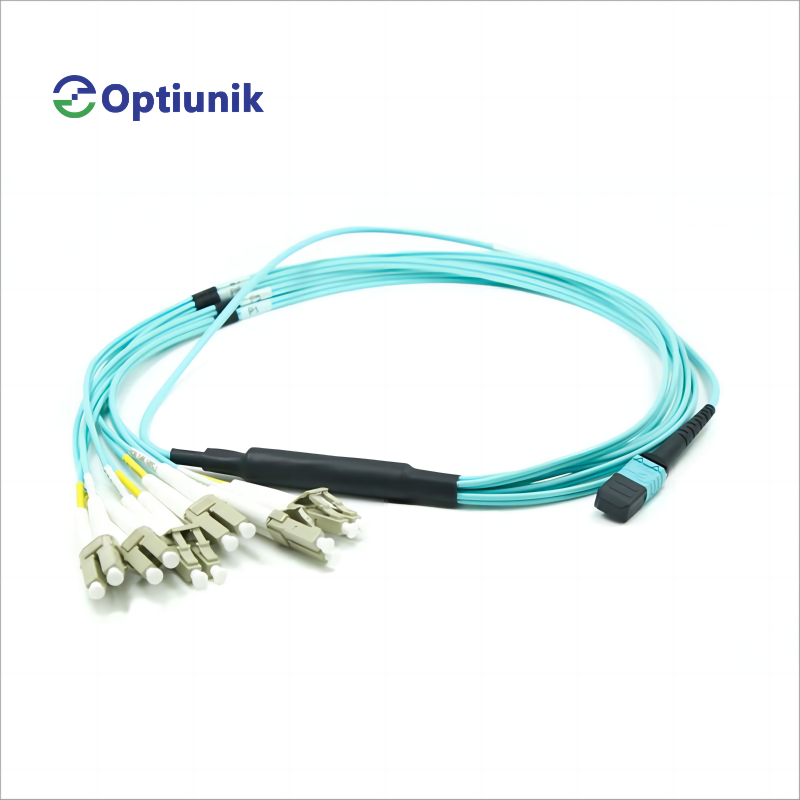
MTP/MPO Polarity, Fiber Count, and Breakout Topology Explained
Type A, B, C polarities. 8/12/24-fiber MTPs. Trunk vs breakout. A field guide that prevents the most expensive cabling mistakes in 40 G/100 G/400 G parallel-optic deployments.
July 20, 2026
 Technical Knowledge
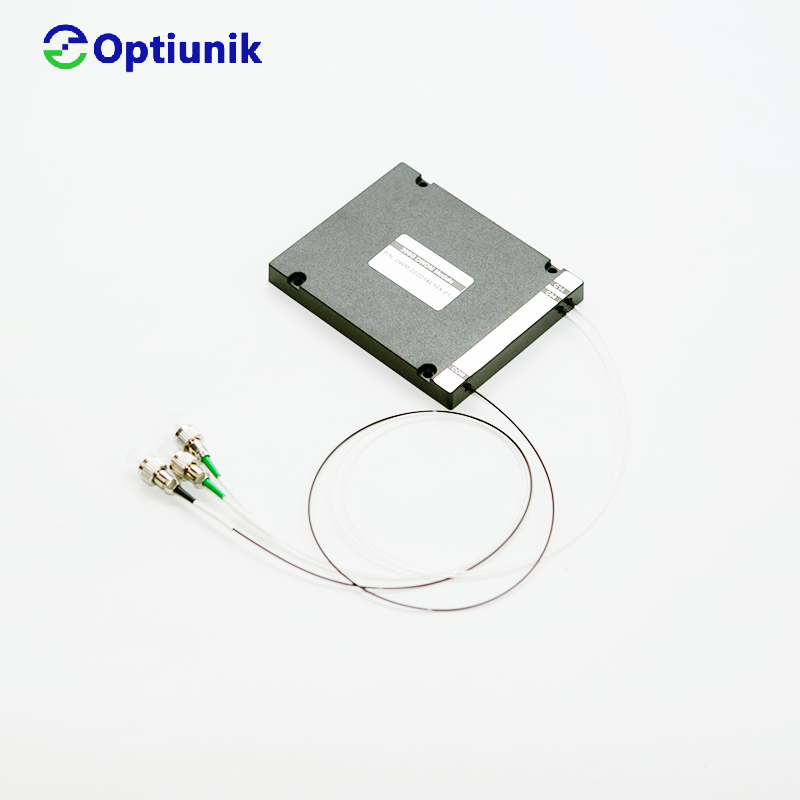
CWDM vs DWDM: Channel Spacing, Reach, and Where Each Wins
The same fiber can carry one signal or eighty. The choice between Coarse and Dense WDM rides on three numbers: channel count, channel spacing, and amplifier tolerance.
July 20, 2026
Ready to source from the factory?
Send us your BOM, target price, and shipping terms. Our team replies within one business day.